If you’re running or working as a BD or an account manager in a wealth management firm in India, there is a 100% chance that you have missed a key liquidity event.
Because by the time you hear about one, someone else has already reached out.
The HNI has already spoken to three other wealth managers.
They've already decided who's going to manage their new capital.
But how do you get there first?
Turns out it’s difficult because liquidity events are scattered across news articles, SEBI / MCA filings, company announcements, and word-of-mouth.
Setting up 50 different signals takes time. Monitoring them takes more time. And even then, you're probably missing half of what's happening.
If this sounds familiar, you're not alone.
Wealth managers across India face the same problem every day.
And in this guide, we'll show you how to track liquidity events 24x7x365, so you're the first to know when an HNI needs wealth management services.
Why Tracking Liquidity Events Is Hard In India
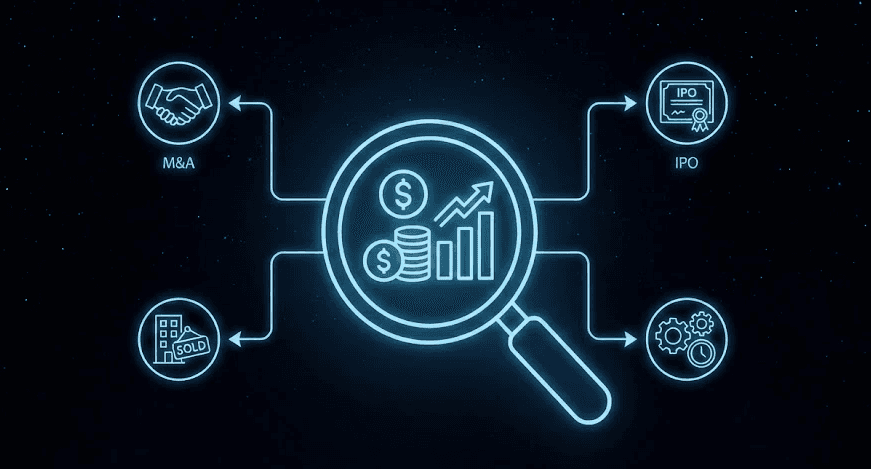
Liquidity events are the moments when HNIs suddenly have large amounts of investable capital.
A few examples - A founder sells shares right after an IPO. A long term employee exercises ESOPs. A business owner sells their company. A property sale closes. An inheritance is received.
These are the moments when HNIs need wealth advice mostThey have cash they didn't have before. They need to diversify. They need tax planning.
They need someone to help them make decisions about their new wealth. (if they don’t have a wealth manager working already).
But finding out about these events is difficult for three reasons:
1. Information is scattered
The news about liquidity events don't happen in one place.
IPO announcements appear on stock exchange websites.
M&A deals are reported in newspapers.
ESOP buybacks are announced on company blogs.
Property sales & inheritance notices are recorded in government registries / gazette notifications that take YEARS to get indexed on Google.
There's no single source that consolidates all of this information. You have to monitor multiple platforms, each with its own format and update schedule.
2. Setting up alerts is time-consuming
To track liquidity events manually, you'd need to set up alerts for:
BSE and NSE announcements
Company press releases
News outlets (Economic Times, Mint, Bloomberg, Business Standard)
Stock exchange filings
MCA records
Property registries
Legal publications
That's 50+ different sources. Each requires a different setup process. Some have RSS feeds. Some have email alerts. Some require manual checking.
3. By the time you find out, it's too late
Even if you set up all these alerts, there's still a delay. News takes time to publish. Stock exchange filings take time to process. Information spreads through word-of-mouth before it appears anywhere official.
By the time you see the alert, other wealth managers have already reached out. The HNI has already had conversations. The opportunity is gone.
The Cost of Missing Liquidity Events For A Wealth Management Firm
Consider what happens when an HNI experiences a liquidity event:
They suddenly have ₹5-50 crore in investable assets (depending on the event)
They need to make decisions quickly about where to invest this capital
They're actively looking for wealth management advice
They're open to new relationships because their financial situation has changed
If you're the first to reach out with relevant context, you have a strong chance of winning the business. If you're the third or fourth, you're competing against established relationships.
And the reality in India is that most wealth managers are missing these opportunities.
They're relying on manual processes that can't keep up with real-time events. They're hearing about liquidity events weeks after they happen. They're watching competitors win clients they should have won.
👉 There's a better way. See how Affluense tracks liquidity events in real-time for Indian wealth management firms
How to Track Liquidity Events: The Manual Method
If you want to track liquidity events manually, here's what you need to do:
Step 1: Identify the types of liquidity events you care about
Focus on the ones that are relevant to your wealth management firm
IPOs: Founders, early employees, and investors selling shares after listing
ESOP buybacks: Employees selling stock options back to the company or secondary buyers
M&A deals: Business owners selling their companies
Property sales: High-value real estate transactions
Inheritance: Wealth transfers through wills and succession
Step 2: Set up alerts for each event type
For each type of liquidity event, you need to monitor different sources:
For IPOs:
BSE and NSE announcements (DRHP filings, IPO allotment, listing dates)
Company press releases
News outlets covering IPOs
SEBI filings
For ESOP buybacks:
Company blogs and internal communications
Startup news platforms (YourStory, Inc42, Entrackr)
Secondary market platforms
LinkedIn posts from company founders
For M&A deals:
MCA filings (form SH-7 for share transfers which are available public)
News outlets covering M&A
Investment banking announcements
Company press releases
For property sales:
State government property registries
Real estate news platforms
Auction listings
Legal publications
For inheritance:
Probate court notices
Legal publications
Succession announcements
Family office networks
Step 3: Create a monitoring system
Once you've identified your sources, you need a system to monitor them:
Google Alerts: Set up alerts for keywords like "IPO," "ESOP buyback," "acquisition," "property sale" + relevant companies or industries. Click here to go to Google Alerts
RSS feeds: Subscribe to BSE, NSE, and news outlet RSS feeds
Email newsletters: Subscribe to daily or weekly newsletters from financial news platforms.
Social media: Follow companies, founders, and investors on LinkedIn and Twitter
Manual checks: Schedule daily or weekly checks of key sources
Step 4: Verify and qualify each event
When you identify a liquidity event, you need to verify it and qualify the prospect:
Verify the event: Is the liquidity event confirmed? What's the timeline? How much capital is involved?
Identify the HNI: Who is experiencing the liquidity event? Founder, employee, business owner, heir?
Estimate investable assets: How much capital will they have after the event?
(From our knowledge here are a few estimates - IPOs: ₹5-50 crore; ESOPs: ₹50 lakh-₹5 crore; M&A: ₹10-100 crore; Property sales: ₹2-20 crore; Inheritance: varies)
Find warm introduction paths: Who in your network is connected to this HNI?
Step 5: Reach out at the right time
Timing matters. Reach out too early, and the HNI isn't ready.
Reach out too late, and they've already made decisions.
The best time to reach out is immediately after the liquidity event is announced but before the capital is actually received.
This is because of a few reasons
HNIs realize they have immediate, complex tax consequences (capital gains) and need professional guidance to minimize their tax bill.
You can catch them when they’re already excited about a lump sum of cash hitting their accounts
Gives you time to build a relationship and demonstrate value before they make investment decisions.
But be aware of a couple of things whilst you reach out.
For most liquidity events, there’s a lock-up period. So a deal might be officially announced or published, but for the HNI to get the amount in their bank, it might take as much as a year.
HNIs might be overwhelmed because it’s natural for wealth managers to flood their inboxes. It might make more sense to go with warm introductions or find a way to a referral using your existing clients.
The Gaps in Manual Tracking
If you've read this far, you've probably realized that manual tracking has significant gaps:
It's time-consuming: Setting up 50+ alerts takes hours. Monitoring them daily takes more hours. Verifying and qualifying each event takes even more time.
It's incomplete: You'll miss events that don't appear in your monitored sources. You'll miss events that happen through word-of-mouth. You'll miss events that are announced in obscure publications.
It's delayed: By the time you see the alert, other wealth managers have already reached out. The HNI has already had conversations. The opportunity is diminished.
It's unscalable: As you grow, you can't manually track more events. You're limited by the time you have available.
A Better Way: Real-Time Liquidity Event Tracking with Affluense
Here's how it works:
All relevant sources, connected
Affluense has already connected to all the sources you'd monitor manually: BSE, NSE, news outlets, MCA filings, property registries, legal publications, and more. You don't need to set up 50 different alerts. We've done it for you.
AI-powered monitoring, 24x7x365
An AI layer monitors these sources continuously, looking for liquidity events. It doesn't sleep. It doesn't take weekends off. It's always watching, so you don't have to.
Real-time alerts
When a liquidity event happens that matches your criteria, Affluense alerts you immediately. You're notified before the news spreads widely, before competitors reach out, before the HNI has made decisions.
Verified event data
Affluense verifies the event, identifies the HNI, estimates investable assets, and provides context. You know exactly who's experiencing a liquidity event, how much capital they have, and how to reach them.
Warm introduction paths
Affluense's Network Graph shows you who in your network is connected to the HNI experiencing the liquidity event. Instead of cold outreach, you can ask for introductions, which convert significantly higher.
How Wealth Managers Are Using Affluense
Nuvama Group (Mumbai) used Affluense
90% reduction in research time per prospect
Higher qualification rates by targeting only HNIs with verified liquidity events
More deals closed by reaching out at the right moment with the right context
Before Affluense, they were spending hours manually monitoring news sources and stock exchange announcements. Now they receive real-time alerts and arrive with verified intelligence and warm intro paths.
That's the difference between hoping for liquidity events and systematically finding them.
👉 Start your free trial - see how Affluense tracks liquidity events in real-time
Frequently Asked Questions
Q: What types of liquidity events does Affluense track?
Affluense tracks all major liquidity events in India: IPOs, ESOP buybacks, M&A deals, property sales, and inheritance events. We monitor BSE, NSE, news outlets, MCA filings, property registries, and legal publications to identify these events in real-time.
Q: How quickly does Affluense alert me when a liquidity event happens?
Affluense alerts you immediately when a liquidity event is detected. The AI layer monitors sources 24x7x365, so you're notified as soon as the information becomes public, often before it spreads widely through news or word-of-mouth.
Q: Can I verify the liquidity event data before reaching out?
Yes. Affluense provides verified event data, including the type of event, estimated investable assets, and context about the HNI. You can cross-reference this information with public sources if needed. All data is sourced from publicly available information, making it ethical and compliant.
Q: What if multiple wealth managers are notified about the same event?
Multiple wealth managers may be notified about the same liquidity event, but Affluense gives you an advantage: warm introduction paths. The Network Graph shows you who in your network is connected to the HNI, allowing you to request introductions instead of sending cold messages. Warm intros convert significantly higher than cold outreach.
Q: Is Affluense data real-time or delayed?
Affluense data is real-time. The AI layer monitors sources continuously and alerts you as soon as a liquidity event is detected. There's no delay between the event becoming public and you being notified.
Q: How does Affluense find liquidity events that I can't find myself?
Affluense monitors more sources than any individual can manually track: BSE, NSE, multiple news outlets, MCA filings, property registries, legal publications, and more. The AI layer processes this information continuously, identifying liquidity events that would be easy to miss in manual monitoring.
Stop Missing Liquidity Events
Tracking liquidity events doesn't have to be a manual, time-consuming process.
If you use tools and the right methods built specifically for real-time event tracking, you can
Receive alerts immediately.
Get verified event data.
Get warm introductions instead of sending cold messages.
And you don't waste hours monitoring 50 different sources every day.
If you're ready to stop relying on manual alerts and start tracking liquidity events systematically,
Affluense can help.
With Affluense, you can:
Track all major liquidity events in India in real-time (IPOs, ESOPs, M&A, property sales, inheritance)
Receive immediate alerts when events happen, before competitors reach out
Get verified event data including estimated investable assets and HNI context
Find warm introduction paths via your network graph
Our data shows that wealth managers using Affluense see a 90% reduction in research time and higher qualification rates by targeting verified liquidity events.
👉 Start your free trial now - see how Affluense tracks liquidity events for wealth management firms
Or book a demo to see how Affluense works for wealth management firms like yours.
Manual tracking means finding out weeks late, by which point the window has usually closed. An HNI research tool with real-time alerts flags the event as it hits public records.
If you’re running or working as a BD or an account manager in a wealth management firm in India, there is a 100% chance that you have missed a key liquidity event.
Because by the time you hear about one, someone else has already reached out.
The HNI has already spoken to three other wealth managers.
They've already decided who's going to manage their new capital.
But how do you get there first?
Turns out it’s difficult because liquidity events are scattered across news articles, SEBI / MCA filings, company announcements, and word-of-mouth.
Setting up 50 different signals takes time. Monitoring them takes more time. And even then, you're probably missing half of what's happening.
If this sounds familiar, you're not alone.
Wealth managers across India face the same problem every day.
And in this guide, we'll show you how to track liquidity events 24x7x365, so you're the first to know when an HNI needs wealth management services.
Why Tracking Liquidity Events Is Hard In India
Liquidity events are the moments when HNIs suddenly have large amounts of investable capital.
A few examples - A founder sells shares right after an IPO. A long term employee exercises ESOPs. A business owner sells their company. A property sale closes. An inheritance is received.
These are the moments when HNIs need wealth advice mostThey have cash they didn't have before. They need to diversify. They need tax planning.
They need someone to help them make decisions about their new wealth. (if they don’t have a wealth manager working already).
But finding out about these events is difficult for three reasons:
1. Information is scattered
The news about liquidity events don't happen in one place.
IPO announcements appear on stock exchange websites.
M&A deals are reported in newspapers.
ESOP buybacks are announced on company blogs.
Property sales & inheritance notices are recorded in government registries / gazette notifications that take YEARS to get indexed on Google.
There's no single source that consolidates all of this information. You have to monitor multiple platforms, each with its own format and update schedule.
2. Setting up alerts is time-consuming
To track liquidity events manually, you'd need to set up alerts for:
BSE and NSE announcements
Company press releases
News outlets (Economic Times, Mint, Bloomberg, Business Standard)
Stock exchange filings
MCA records
Property registries
Legal publications
That's 50+ different sources. Each requires a different setup process. Some have RSS feeds. Some have email alerts. Some require manual checking.
3. By the time you find out, it's too late
Even if you set up all these alerts, there's still a delay. News takes time to publish. Stock exchange filings take time to process. Information spreads through word-of-mouth before it appears anywhere official.
By the time you see the alert, other wealth managers have already reached out. The HNI has already had conversations. The opportunity is gone.
The Cost of Missing Liquidity Events For A Wealth Management Firm
Consider what happens when an HNI experiences a liquidity event:
They suddenly have ₹5-50 crore in investable assets (depending on the event)
They need to make decisions quickly about where to invest this capital
They're actively looking for wealth management advice
They're open to new relationships because their financial situation has changed
If you're the first to reach out with relevant context, you have a strong chance of winning the business. If you're the third or fourth, you're competing against established relationships.
And the reality in India is that most wealth managers are missing these opportunities.
They're relying on manual processes that can't keep up with real-time events. They're hearing about liquidity events weeks after they happen. They're watching competitors win clients they should have won.
👉 There's a better way. See how Affluense tracks liquidity events in real-time for Indian wealth management firms
How to Track Liquidity Events: The Manual Method
If you want to track liquidity events manually, here's what you need to do:
Step 1: Identify the types of liquidity events you care about
Focus on the ones that are relevant to your wealth management firm
IPOs: Founders, early employees, and investors selling shares after listing
ESOP buybacks: Employees selling stock options back to the company or secondary buyers
M&A deals: Business owners selling their companies
Property sales: High-value real estate transactions
Inheritance: Wealth transfers through wills and succession
Step 2: Set up alerts for each event type
For each type of liquidity event, you need to monitor different sources:
For IPOs:
BSE and NSE announcements (DRHP filings, IPO allotment, listing dates)
Company press releases
News outlets covering IPOs
SEBI filings
For ESOP buybacks:
Company blogs and internal communications
Startup news platforms (YourStory, Inc42, Entrackr)
Secondary market platforms
LinkedIn posts from company founders
For M&A deals:
MCA filings (form SH-7 for share transfers which are available public)
News outlets covering M&A
Investment banking announcements
Company press releases
For property sales:
State government property registries
Real estate news platforms
Auction listings
Legal publications
For inheritance:
Probate court notices
Legal publications
Succession announcements
Family office networks
Step 3: Create a monitoring system
Once you've identified your sources, you need a system to monitor them:
Google Alerts: Set up alerts for keywords like "IPO," "ESOP buyback," "acquisition," "property sale" + relevant companies or industries. Click here to go to Google Alerts
RSS feeds: Subscribe to BSE, NSE, and news outlet RSS feeds
Email newsletters: Subscribe to daily or weekly newsletters from financial news platforms.
Social media: Follow companies, founders, and investors on LinkedIn and Twitter
Manual checks: Schedule daily or weekly checks of key sources
Step 4: Verify and qualify each event
When you identify a liquidity event, you need to verify it and qualify the prospect:
Verify the event: Is the liquidity event confirmed? What's the timeline? How much capital is involved?
Identify the HNI: Who is experiencing the liquidity event? Founder, employee, business owner, heir?
Estimate investable assets: How much capital will they have after the event?
(From our knowledge here are a few estimates - IPOs: ₹5-50 crore; ESOPs: ₹50 lakh-₹5 crore; M&A: ₹10-100 crore; Property sales: ₹2-20 crore; Inheritance: varies)
Find warm introduction paths: Who in your network is connected to this HNI?
Step 5: Reach out at the right time
Timing matters. Reach out too early, and the HNI isn't ready.
Reach out too late, and they've already made decisions.
The best time to reach out is immediately after the liquidity event is announced but before the capital is actually received.
This is because of a few reasons
HNIs realize they have immediate, complex tax consequences (capital gains) and need professional guidance to minimize their tax bill.
You can catch them when they’re already excited about a lump sum of cash hitting their accounts
Gives you time to build a relationship and demonstrate value before they make investment decisions.
But be aware of a couple of things whilst you reach out.
For most liquidity events, there’s a lock-up period. So a deal might be officially announced or published, but for the HNI to get the amount in their bank, it might take as much as a year.
HNIs might be overwhelmed because it’s natural for wealth managers to flood their inboxes. It might make more sense to go with warm introductions or find a way to a referral using your existing clients.
The Gaps in Manual Tracking
If you've read this far, you've probably realized that manual tracking has significant gaps:
It's time-consuming: Setting up 50+ alerts takes hours. Monitoring them daily takes more hours. Verifying and qualifying each event takes even more time.
It's incomplete: You'll miss events that don't appear in your monitored sources. You'll miss events that happen through word-of-mouth. You'll miss events that are announced in obscure publications.
It's delayed: By the time you see the alert, other wealth managers have already reached out. The HNI has already had conversations. The opportunity is diminished.
It's unscalable: As you grow, you can't manually track more events. You're limited by the time you have available.
A Better Way: Real-Time Liquidity Event Tracking with Affluense
Here's how it works:
All relevant sources, connected
Affluense has already connected to all the sources you'd monitor manually: BSE, NSE, news outlets, MCA filings, property registries, legal publications, and more. You don't need to set up 50 different alerts. We've done it for you.
AI-powered monitoring, 24x7x365
An AI layer monitors these sources continuously, looking for liquidity events. It doesn't sleep. It doesn't take weekends off. It's always watching, so you don't have to.
Real-time alerts
When a liquidity event happens that matches your criteria, Affluense alerts you immediately. You're notified before the news spreads widely, before competitors reach out, before the HNI has made decisions.
Verified event data
Affluense verifies the event, identifies the HNI, estimates investable assets, and provides context. You know exactly who's experiencing a liquidity event, how much capital they have, and how to reach them.
Warm introduction paths
Affluense's Network Graph shows you who in your network is connected to the HNI experiencing the liquidity event. Instead of cold outreach, you can ask for introductions, which convert significantly higher.
How Wealth Managers Are Using Affluense
Nuvama Group (Mumbai) used Affluense
90% reduction in research time per prospect
Higher qualification rates by targeting only HNIs with verified liquidity events
More deals closed by reaching out at the right moment with the right context
Before Affluense, they were spending hours manually monitoring news sources and stock exchange announcements. Now they receive real-time alerts and arrive with verified intelligence and warm intro paths.
That's the difference between hoping for liquidity events and systematically finding them.
👉 Start your free trial - see how Affluense tracks liquidity events in real-time
Frequently Asked Questions
Q: What types of liquidity events does Affluense track?
Affluense tracks all major liquidity events in India: IPOs, ESOP buybacks, M&A deals, property sales, and inheritance events. We monitor BSE, NSE, news outlets, MCA filings, property registries, and legal publications to identify these events in real-time.
Q: How quickly does Affluense alert me when a liquidity event happens?
Affluense alerts you immediately when a liquidity event is detected. The AI layer monitors sources 24x7x365, so you're notified as soon as the information becomes public, often before it spreads widely through news or word-of-mouth.
Q: Can I verify the liquidity event data before reaching out?
Yes. Affluense provides verified event data, including the type of event, estimated investable assets, and context about the HNI. You can cross-reference this information with public sources if needed. All data is sourced from publicly available information, making it ethical and compliant.
Q: What if multiple wealth managers are notified about the same event?
Multiple wealth managers may be notified about the same liquidity event, but Affluense gives you an advantage: warm introduction paths. The Network Graph shows you who in your network is connected to the HNI, allowing you to request introductions instead of sending cold messages. Warm intros convert significantly higher than cold outreach.
Q: Is Affluense data real-time or delayed?
Affluense data is real-time. The AI layer monitors sources continuously and alerts you as soon as a liquidity event is detected. There's no delay between the event becoming public and you being notified.
Q: How does Affluense find liquidity events that I can't find myself?
Affluense monitors more sources than any individual can manually track: BSE, NSE, multiple news outlets, MCA filings, property registries, legal publications, and more. The AI layer processes this information continuously, identifying liquidity events that would be easy to miss in manual monitoring.
Stop Missing Liquidity Events
Tracking liquidity events doesn't have to be a manual, time-consuming process.
If you use tools and the right methods built specifically for real-time event tracking, you can
Receive alerts immediately.
Get verified event data.
Get warm introductions instead of sending cold messages.
And you don't waste hours monitoring 50 different sources every day.
If you're ready to stop relying on manual alerts and start tracking liquidity events systematically,
Affluense can help.
With Affluense, you can:
Track all major liquidity events in India in real-time (IPOs, ESOPs, M&A, property sales, inheritance)
Receive immediate alerts when events happen, before competitors reach out
Get verified event data including estimated investable assets and HNI context
Find warm introduction paths via your network graph
Our data shows that wealth managers using Affluense see a 90% reduction in research time and higher qualification rates by targeting verified liquidity events.
👉 Start your free trial now - see how Affluense tracks liquidity events for wealth management firms
Or book a demo to see how Affluense works for wealth management firms like yours.
Manual tracking means finding out weeks late, by which point the window has usually closed. An HNI research tool with real-time alerts flags the event as it hits public records.